

Do you ever feel like you’re your own worst enemy when trading? If so, you’re not alone—because, in many cases, traders really are their own biggest obstacle. Trading is perhaps the ultimate test of self-discipline and self-control. It will expose your inability to manage emotions in the face of constant temptation—or it will reward you richly if you can maintain that control. Unfortunately, most traders struggle to consistently manage themselves in the markets.
Below are four common self-defeating trading habits that you’ve likely encountered. Understanding and addressing them can help you remove these barriers and move closer to trading success.
1. The Need to Be ‘In Control’ of the Market
Ironically, to take control of your trading, you have to let go of the illusion of control.
Humans naturally crave control over their environment, and losing control triggers emotions like fear and anger. In trading, this need to dominate the market often backfires, causing:
- Over-trading
- Cutting trades prematurely before they’ve had a chance to develop
- Over-leveraging or risking too much because we think we “know” what will happen next
- Avoiding losses by trading without stops or constantly moving them
These are just a few examples of how our desire for control sabotages our trading results.
Here’s the reality: the market is inherently unpredictable. While certain price action patterns or market behaviors are somewhat reliable, nothing in trading is guaranteed. Yet, many traders act as if they can force the market to do what they want. This mindset leads to self-defeating behaviors like ignoring stop losses, trading excessively, prematurely taking profits, or second-guessing their strategies.
Most traders lack self-control when it comes to real money, which is why roughly 90% fail in the long run. True control in trading isn’t about manipulating the market—it’s about mastering yourself. Often, this means doing nothing. Resisting the constant urge to over-trade, tweak trades, or chase the market is challenging, but it’s critical for long-term success.
The bottom line: the market cannot be controlled. Actions you take because you think you know what will happen next are often counterproductive. The key is to accept uncertainty and make every trading decision based on logic and price action, not speculation or desire.
A practical way to implement this is to pause before every trade and ask yourself:
“Am I doing this because I think I know what the market will do, or is this a logical, price-action-based decision?”
The most effective traders spend much of their time doing nothing—letting the market work, and controlling only what they truly can: themselves.
“2.The Slow, Silent Drain on Your Trading Account”
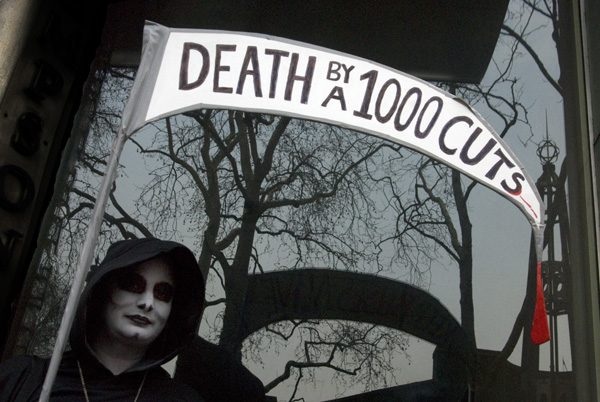
2. “Death by a Thousand Cuts”
Taking a smaller loss than you initially planned on a trade can feel like the smart move. After all, the mantra in trading is to keep losses small, right? Yes—but only to a point.
The phrase “death by a thousand cuts” perfectly captures a common way traders erode their accounts. How often have you closed a trade manually before it hit your stop loss, only to watch it reverse and move in your favor? If this has happened to you, you know how frustrating it can be. The problem is that this habit assumes you can predict the market with certainty—which, as we discussed, you can’t.
You must allow the market to determine if your trade idea is wrong. Cutting a trade short out of fear of taking your predetermined 1R loss undermines your strategy. If you have a solid trading edge, like a price action method, you need to give it the opportunity to work. Prematurely closing trades not only limits potential profit but also guarantees a loss—definitely not ideal.
Exiting trades before reaching your predetermined loss should only happen for valid, logical reasons. For example, if your plan includes moving a stop to breakeven after reaching a certain profit (say 1.5R), that’s acceptable. The real danger is adjusting stops on a whim during a trade based on fear or greed—this is just another way of trying to control the market rather than controlling yourself.
Think of losses as the cost of doing business. You’re “paying” 1R to see if your trade idea will play out. If you don’t allow that, you’re wasting your trading edge and undermining the efficiency of your strategy.
Remember: Don’t prove your own trading idea wrong before the market does. If you followed your trading plan and entered a well-thought-out trade, cutting it short prematurely makes no sense.
3. Thinking You Know ‘For Sure’ What the Market Will Do Next
Many traders dig themselves into trouble because they act as if they know exactly what the market will do next. This mindset is extremely dangerous and leads to lost money, wasted time, and unnecessary frustration.
The challenge in trading is deciding whether to act or to wait. Your options at any moment are limited: enter a trade, stay out of the market, let a trade run, or adjust trade parameters (like stop loss, targets, or positions).
Whatever you do, always remember: you can never know for sure what price will do next. Successful trading comes from acting logically, based on what the price action shows on your charts—not on what you hope will happen or what you think you know with certainty.
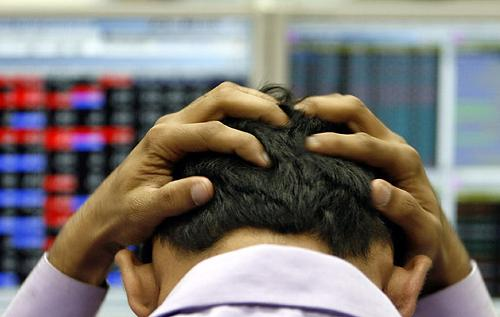
4. Entering ‘Stupid Trades’
Ah, the dreaded “stupid trades”—arguably the most common mistake all traders make at some point. There’s a direct link between the number of these trades you take and how long it will take to become a consistently profitable trader. Simply put: the more poorly considered trades you enter, the longer it will take to succeed. And if the frequency of these trades keeps rising, you risk eventually blowing out your trading account.
Stupid trades usually lead to a string of small losses because most traders can recognize that the trade wasn’t well-planned or logical. Many close these trades quickly, but as we discussed earlier, death by a thousand cuts is one of the main reasons trading accounts get wiped out.
It’s not easy to resist the urge to pull the trigger on a live account, but the more you practice patience, the more your account will benefit. Learning to wait for clear, high-probability price action setups is arguably the single most important skill for becoming a successful trader—and for most people, it’s also the hardest.
Sometimes, traders enter stupid trades because they haven’t yet mastered an effective trading method and don’t fully know what to look for in the market. Other times, they already have a solid strategy but lack the discipline to stick to it. Until you gain mastery over both your mind and your trading plan, you will continue to fall prey to self-defeating habits like these.
Get high-accuracy trading signals delivered directly to your Telegram. Subscribe to specialized packages tailored for the world’s top markets:
Free Crypto Signals Subscribe via Telegram
Free Forex Signals Subscribe via Telegram
Free VIP Signals (Gold, Oil, Forex, Bitcoin, Ethereum, Indices) Subscribe via Telegram
Free Trading Acoount Open With ORON LIMITED Signals (Gold, Oil, Forex, Bitcoin, Ethereum, Indices)
Open Account
Not profitable? Don’t worry! Join our copy trading system where we provide lower risk returns. Benefits of Joining Us:
-Lesser Risk as lot size is minimal
-Higher returns (approx. 5% to 10% monthly)
-Easy Deposit and Withdrawal with USDT using crypto wallets
-Lesser Drawdown
-Instant Support
-Invest Now and get guaranteed returns with us. DM us for more info❤️
-Start Now
*Copy Trading is free but we charge some percentage of profit as fees.*
Full VIP signals performance report for September 22–26, 2025:
