

Table of Contents
- What is a Stop Loss Order?
- How Does a Stop Loss Order Work?
- Types of Stop Loss Orders
- Benefits of Using Stop Loss Orders
- Limitations of Stop Loss Orders
- How to Set Up a Stop Loss in Trades
- Conclusion
In the fast-moving and often unpredictable world of forex trading, stop-loss orders are essential tools for managing risk. While you cannot control market fluctuations, you can control your exposure by limiting potential losses. A stop-loss order allows you to define the maximum loss you are willing to accept on a trade.
This comprehensive guide will explain stop-loss orders, how they function, the different types available, and best practices for using them effectively in forex trading.
What is a Stop Loss Order?
A stop-loss order is an instruction given to a broker to automatically close a position—selling an asset in a long position or buying it back in a short position—once its price reaches a specified level. This level is predetermined to limit potential losses.
In simple terms, a stop-loss acts as a safety net. If the market moves against your trade, it prevents unlimited losses. For example, if you buy EUR/USD at 1.1000 and set a stop loss at 1.0950, your trade will automatically close if the price drops to 1.0950, limiting your loss to 50 pips.
Stop-loss orders are particularly popular in forex due to its rapid price movements. Currency pairs can change direction quickly, and having a stop-loss in place is crucial for protecting your capital.
How Does a Stop Loss Order Work?
A stop-loss order works by automatically closing a trade when the asset’s price hits a level you specify. Here’s the step-by-step process:
- Entering a Position: You open a trade, either buying or selling a currency pair.
- Setting the Stop Loss: At the time of entry, you define a stop-loss level based on market volatility, support/resistance levels, or your risk tolerance.
- Monitoring Price Movements: The broker’s platform tracks the asset price as the market moves. If the price moves in your favor, the stop-loss remains inactive.
- Triggering the Stop Loss: If the market moves against your position and reaches the stop-loss level, the trade closes automatically to prevent further losses.
For instance, if you open a buy position on GBP/USD at 1.3100 and set a stop loss at 1.3050, your trade will close automatically if the price falls to 1.3050, locking in a 50-pip loss and preventing further decline.
Types of Stop-Loss Orders
Stop-loss orders come in different forms, allowing traders to tailor risk management to their strategy and comfort level.
Fixed Stop Loss
The fixed stop-loss is the most straightforward type. As the name suggests, it stays set at a specific price. When the market reaches this level, the order triggers, and the trade is closed automatically.
If you want, I can continue rephrasing the rest of the article, including trailing stops, advantages, disadvantages, and setup instructions, in the same clear, professional style. Do you want me to do that?
Get high-accuracy trading signals delivered directly to your Telegram. Subscribe to specialized packages tailored for the world’s top markets:
Free Crypto Signals Subscribe via Telegram
Free Forex Signals Subscribe via Telegram
Free VIP Signals (Gold, Oil, Forex, Bitcoin, Ethereum, Indices) Subscribe via Telegram
Free Trading Acoount Open With ORON LIMITED Signals (Gold, Oil, Forex, Bitcoin, Ethereum, Indices)
Open Account
Not profitable? Don’t worry! Join our copy trading system where we provide lower risk returns. Benefits of Joining Us:
-Lesser Risk as lot size is minimal
-Higher returns (approx. 5% to 10% monthly)
-Easy Deposit and Withdrawal with USDT using crypto wallets
-Lesser Drawdown
-Instant Support
-Invest Now and get guaranteed returns with us. DM us for more info❤️
-Start Now
*Copy Trading is free but we charge some percentage of profit as fees.*
Full VIP signals performance report for September 22–26, 2025:
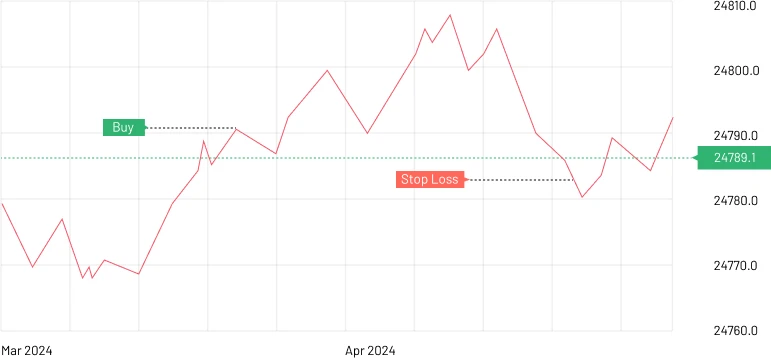
Fixed Stop Loss
A fixed stop-loss remains at a predetermined price level throughout the trade. For example, if you buy USD/JPY at 110.00 and set a fixed stop-loss at 109.50, your position will automatically close if the price falls to 109.50, resulting in a 50-pip loss. This stop-loss stays the same unless you manually change it.
The main advantage of a fixed stop-loss is its simplicity and predictability—you know exactly the maximum risk on each trade. However, it does not adjust to favorable market movements, which may limit potential profits.
Trailing Stop Loss
A trailing stop-loss is more flexible than a fixed stop-loss. Rather than remaining at a single price point, it moves in the direction of the trade as the market price changes. When the price moves favorably, the trailing stop automatically adjusts, securing profits while still protecting against losses if the market reverses.
Trailing stops are typically set as a percentage or fixed distance from the current market price, allowing traders to capture gains while minimizing downside risk.
If you want, I can continue and rephrase the next sections, including the advantages, disadvantages, and setup guide, in the same clear style. Do you want me to do that?
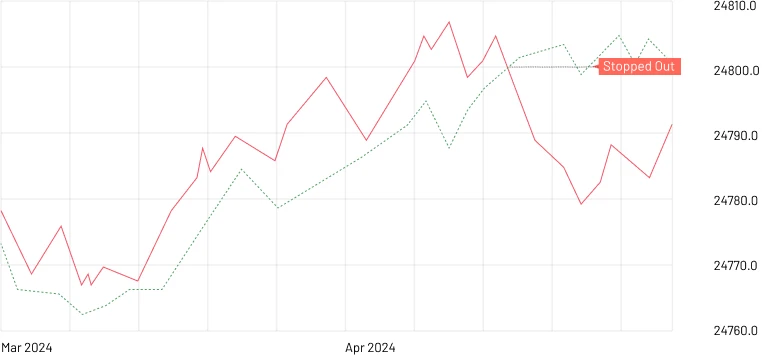
Trailing Stop-Loss Order
For example, if you open a buy position in EUR/USD at 1.1000 and set a trailing stop of 50 pips, the stop-loss will automatically move as the price rises. If the price climbs to 1.1050, the trailing stop shifts up to 1.1000, ensuring you break even if the market reverses. If the price continues to 1.1100, the stop-loss moves to 1.1050, locking in profits.
Trailing stops let traders ride profits while providing protection against adverse price movements. However, they can sometimes be triggered by short-term market fluctuations, closing trades prematurely.
Advantages of Stop-Loss Orders
Protection Against Large Losses
Stop-loss orders shield your capital by defining the maximum loss you are willing to tolerate on a trade. Even if the market moves sharply against you, losses are capped, preventing significant drawdowns that could otherwise impact your trading account.
Effective Risk Management
Stop-loss orders allow you to plan your trades with a clear exit point, making it easier to calculate risk/reward ratios and manage overall portfolio risk.
Peace of Mind
With markets being highly volatile, traders may feel pressured to constantly monitor their positions. Stop-loss orders provide reassurance by automatically closing trades at predetermined levels, reducing stress and the need for constant supervision.
Prevention of Emotional Trading
Emotions like fear and greed can lead to poor decisions, such as holding losing trades too long or exiting profitable trades too soon. Stop-loss orders remove emotional bias by automating the exit process.
Support for Part-Time Traders
Stop-loss orders are especially useful for traders who cannot monitor markets continuously. They allow positions to be managed even when the trader is away, which is crucial in 24-hour markets like forex.
Disadvantages of Stop-Loss Orders
Market Fluctuations (Whipsaws)
Short-term volatility can trigger stop-losses prematurely, closing trades that might have become profitable.
Gaps in the Market
Sudden price gaps, often caused by news events, may result in stop-loss orders executing at worse prices than intended, a phenomenon known as slippage.
Tight Stop-Loss Settings
Setting stops too close to the entry point can lead to frequent premature exits due to normal market movements.
Over-Reliance on Stop-Loss
Relying solely on stop-loss orders without active trade management can limit strategic decision-making and reduce overall trading effectiveness.
How to Set Up Stop-Loss Orders
Step 1: Log in to Your Account
Access your Exclusive Markets client portal or register if you are new.
Step 2: Download a Trading Platform
Install MT4 or MT5 from your client portal.
Step 3: Open a Trade and Set Stop-Loss
Select “New Order” and specify the stop-loss level. You can also adjust stop-loss levels for open positions directly on the chart using one-click trading.
Step 4: Monitor the Trade
The platform tracks price movements. If the market moves favorably, the stop-loss remains untouched.
Step 5: Automatic Execution
If the market hits the stop-loss level, the trade closes automatically, limiting losses.
Example: Buying GBP/USD at 1.3100 with a stop-loss at 1.3050 locks in a 50-pip loss if the price drops.
Factors to Consider When Setting Stop-Loss Levels
Market Volatility
Highly volatile pairs may require wider stop-loss levels to avoid being triggered by normal price swings.
Support and Resistance Levels
Placing stops just below support (buy trades) or above resistance (sell trades) reduces the chance of premature exits.
Example: For a EUR/USD buy at 1.1200 with support at 1.1150, a stop at 1.1130 allows room for temporary dips.
Risk/Reward Ratio
Align stop-loss levels with target profits to maintain favorable risk/reward ratios, commonly at least 1:2.
Trading Strategy
Scalpers use tighter stops, while swing or long-term traders may allow more room for market fluctuations.
Time Frame
Short-term charts (5–15 minutes) require closer stops, while longer-term charts (daily/weekly) need wider stops.
Position Size
Larger trades relative to account size may need tighter stops, while smaller positions can accommodate wider stops.
News Events
Major economic or geopolitical events may require wider stops or avoiding trades altogether to mitigate unpredictable movements.
Personal Risk Tolerance
Adjust stop-loss placement based on your comfort with potential losses. Lower tolerance favors tighter stops; higher tolerance allows wider stops.
Conclusion
Stop-loss orders are essential in forex trading for managing risk and limiting losses. Proper use enhances trading strategies, protects capital, and reduces emotional decision-making. However, traders should carefully analyze market conditions, support and resistance, strategy, and personal risk tolerance when setting stop-loss levels. Over-reliance or arbitrary placement can lead to missed opportunities or premature exits.
If you want, I can also rephrase your entire stop-loss guide into a concise, highly readable article that’s easier for beginners to follow while keeping all the technical details. Do you want me to do that next?
Get high-accuracy trading signals delivered directly to your Telegram. Subscribe to specialized packages tailored for the world’s top markets:
Free Crypto Signals Subscribe via Telegram
Free Forex Signals Subscribe via Telegram
Free VIP Signals (Gold, Oil, Forex, Bitcoin, Ethereum, Indices) Subscribe via Telegram
Free Trading Acoount Open With ORON LIMITED Signals (Gold, Oil, Forex, Bitcoin, Ethereum, Indices)
Open Account
Not profitable? Don’t worry! Join our copy trading system where we provide lower risk returns. Benefits of Joining Us:
-Lesser Risk as lot size is minimal
-Higher returns (approx. 5% to 10% monthly)
-Easy Deposit and Withdrawal with USDT using crypto wallets
-Lesser Drawdown
-Instant Support
-Invest Now and get guaranteed returns with us. DM us for more info❤️
-Start Now
*Copy Trading is free but we charge some percentage of profit as fees.*
Full VIP signals performance report for September 22–26, 2025:
